

Could low vitamin D levels be affecting your health?
Vitamin D helps support healthy bones, muscles and normal immune function. Yet many people spend little time outdoors or don't get enough sunlight, particularly during autumn and winter. A simple home blood test shows whether your vitamin D levels are where they should be and helps you decide if supplementation is right for you.
Who is at Risk of Deficiency?
You may benefit from checking your vitamin D levels if you:
- Work indoors or spend little time in the sun.
- Live in a country with long winters.
- Wear clothing that covers most of your skin outdoors.
- Have naturally darker skin.
- Are planning a pregnancy or are breastfeeding.
- Want to support healthy bones, muscles and immunity.
- Exercise regularly or want to recover well.
- Are interested in healthy ageing.
- Have been told your vitamin D levels were low in the past.
- Simply want to know whether your levels are where they should be.
What is Vitamin D
Vitamin D3 (cholecalciferol)is the form of vitamin D produced in your skin when exposed to UVB sunlight and the primary form found in animal-based foods or supplements. It is one of two main forms of vitamin D (the other being D2, ergocalciferol, from plant sources)
How is Vitamin D Measured?
- Vitamin D3 itself is not typically measured directly in routine tests. Instead, doctors measure25-hydroxyvitamin D [25(OH)D or calcidiol], the main circulating form in the blood.
- Method: A simple blood test (serum or plasma) drawn from a vein or sometimes a finger prick. No fasting is usually required.

References
- Vitamin D and prevention of breast cancer: pooled analysis – link
- COVID-19 Mortality Risk Correlates Inversely with Vitamin D3 Status, and a Mortality Rate Close to Zero Could Theoretically Be Achieved at 50 ng/mL 25(OH)D3: Results of a Systematic Review and Meta-Analysis – link
- Vitamin D and prevention of breast cancer: pooled analysis – link
- NHS overview of Osteoporosis – link
- Expression of the multiple sclerosis-associated MHC class II Allele HLA-DRB1*1501 is regulated by vitamin D – link
- 1,25-Dihydroxyvitamin D(3) is a negative endocrine regulator of the renin-angiotensin system – link
- Myocardial infarction is inversely associated with plasma 25-hydroxyvitamin D3 levels: a community-based study – link
- The prevalence of vitamin D inadequacy amongst women with osteoporosis: an international epidemiological investigation – link
- Vitamin D deficiency is associated with anxiety and depression in fibromyalgia – link
- Vitamin D and autoimmune disease – link
- Schizophrenia, vitamin D, and brain development – link
- Vitamin D and diabetes – link
- Vitamin D Deficiency Common in Patients With Chronic Migraine – link
- Maternal vitamin D deficiency increases the risk of preeclampsia –
link - Vitamin D for Cancer Prevention: Global Perspective – link
- NIH Vitamin D Factsheet – link
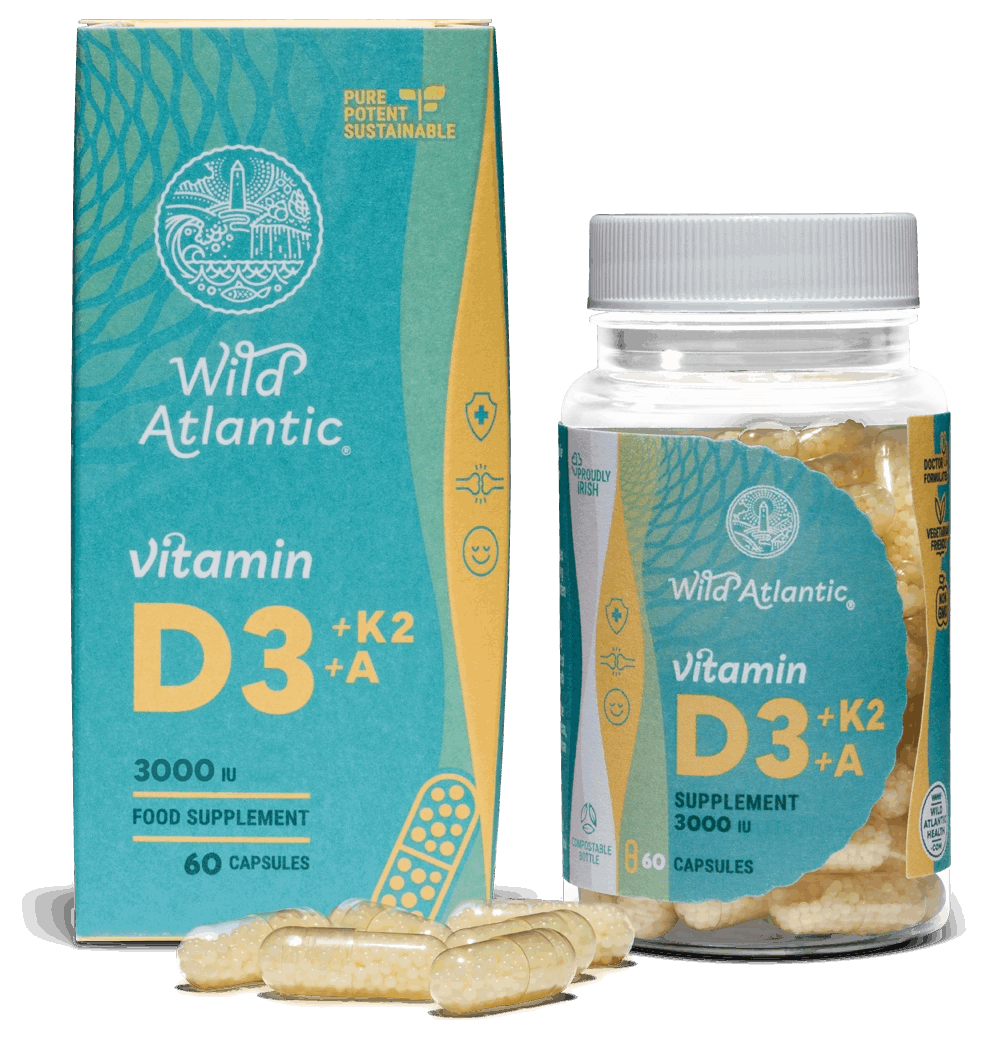
Vitamin D3+K2+A
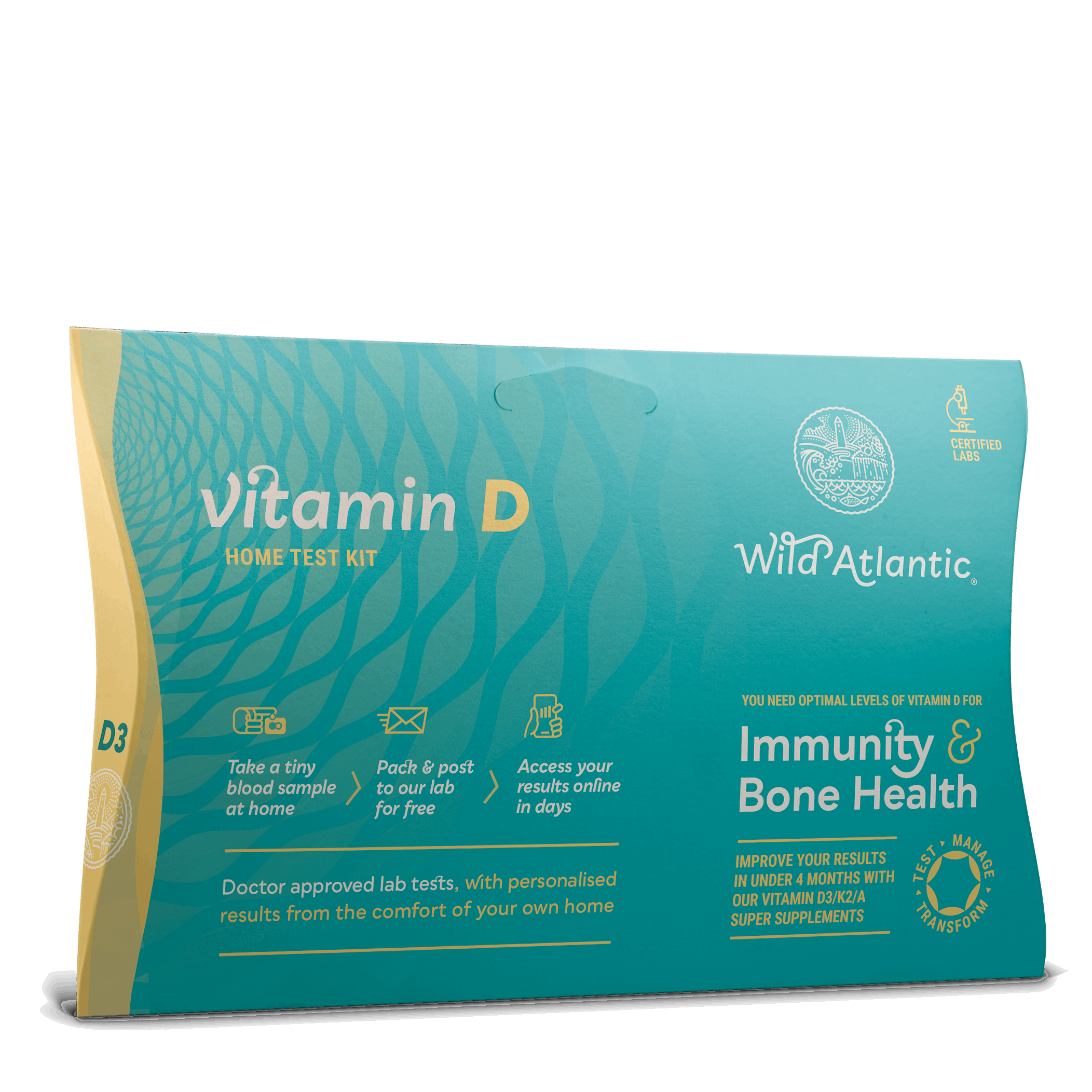
Vitamin D Test
Our at-home Vitamin D test provides a convenient way to check your vitamin D levels without the hassle of visiting a doctor.

Sunshine System Bundle
Why Is Vitamin D Important?


It promotes calcium and phosphorus absorption in the intestines, enabling normal bone mineralization. Deficiency can cause rickets (in children), osteomalacia (soft bones in adults), and contribute to osteoporosis.


Supports muscle strength and reduces fall risk, especially in older adults.


Helps modulate immune responses and may reduce risk of respiratory infections.


Involved in reducing inflammation, cell growth, glucose metabolism, and neuromuscular function. Low levels are linked to higher risks of various conditions (cardiovascular, autoimmune, certain cancers, etc.), though causation is not always fully established

What next?
For personalised advice, get a Vitamin D3 blood test (link) and consult a doctor, dietitian or nutritional therapist - especially if you have symptoms or risk factors. Levels can be improved safely with supplementation, sun exposure and diet.
Other Articles About Vitamin D
View all-

How to Work Out Your Vitamin D Dosage (Step by ...
Millions of people—especially those living in northern climates—are unknowingly deficient in vitamin D. If you work indoors,...
How to Work Out Your Vitamin D Dosage (Step by ...
Sep 12,2025Millions of people—especially those living in northern climates—are unknowingly deficient in vitamin D. If you work indoors,...
Read More -

Omega 3 and Its Effect On The Immune System
Omega-3 fatty acids, essential nutrients found in various foods and supplements, are well-known for their numerous health...
Omega 3 and Its Effect On The Immune System
Mar 14,2025Omega-3 fatty acids, essential nutrients found in various foods and supplements, are well-known for their numerous health...
Read More -

How Long Does It Take Omega 3 To Work?
Omega-3 fatty acids are essential for various aspects of health, but the time it takes to notice...
How Long Does It Take Omega 3 To Work?
Mar 14,2025Omega-3 fatty acids are essential for various aspects of health, but the time it takes to notice...
Read More


